Saber-toothed Cat Tooth
Smilodon species
Also known as Smilodon fatalis, Smilodon gracilis, Sabertooth
Markings and exact colorations may vary.
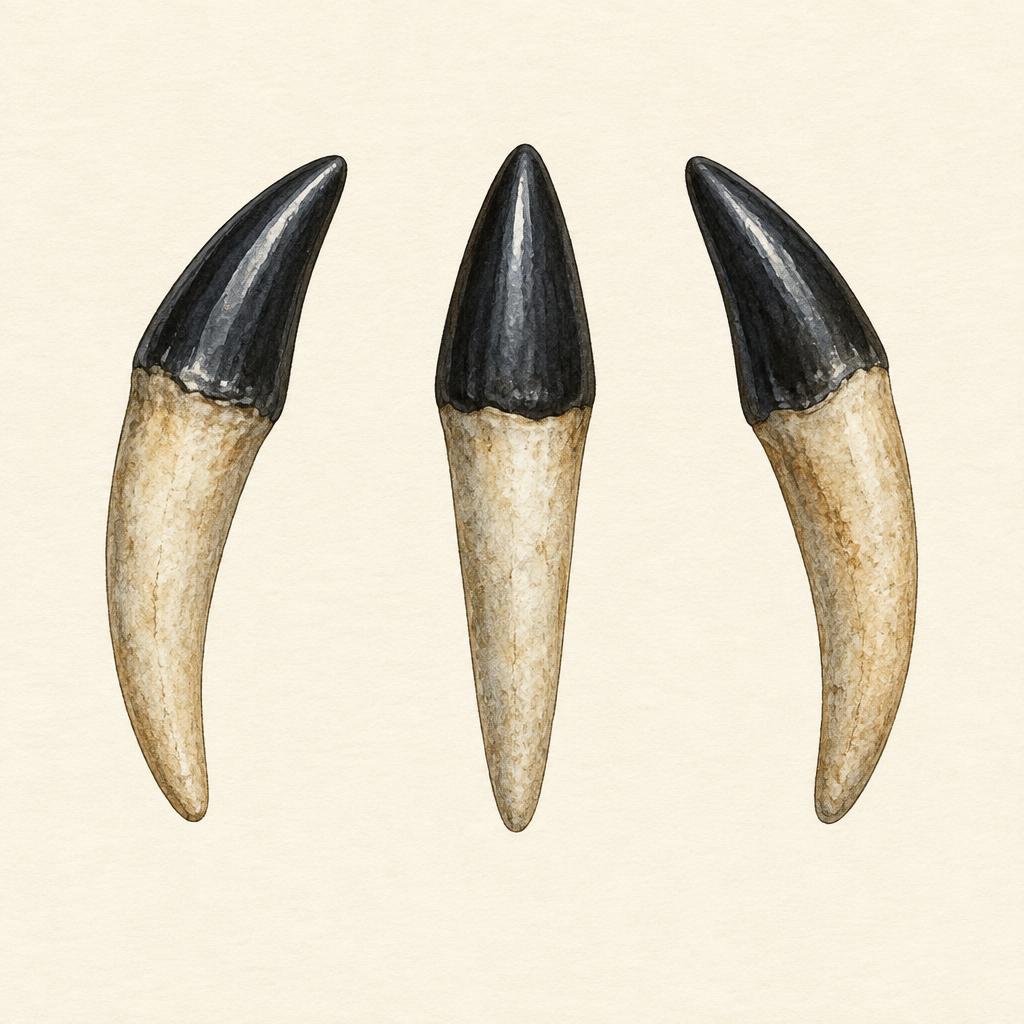
A long, flattened, curved fossil canine with finely serrated edges — almost always found broken.
- Typical size
- Fragments 1–4 in; whole canines up to 7 in
- How often it turns up
- Very rare
- Collecting
- Restricted
- Handling
- Safe to handle
A vertebrate fossil that is not a shark or ray tooth: collecting it on Florida state land or water, including beaches below the high-tide line, requires a Florida Museum Fossil Permit, and significant finds must be reported. Collecting is banned in Florida state parks and national seashores. A saber-tooth find is significant — photograph it in place and report it.
How to tell it apart
- Long, blade-like, flattened from side to side
- Gently curved with fine serrations
- Usually fragments of the crown
Where to find these in Florida
Beaches rated very good or excellent for fossils. Each page shows today’s score, the best window and access details.
- Caspersen Beach · Venice
- Englewood Beach (Chadwick Park) · Englewood
- Stump Pass Beach State Park · Englewood
- Turner Beach · Captiva
- Turtle Beach · Siesta Key
Found one?
Photograph it and BeachNut ranks the likely matches with a confidence read, then logs it to your collection with the beach and date.
Browsing beaches and the full field guide is free. A free account logs unlimited finds and gives you three photo identifications a day.
More fossils in the field guide
Get Florida beachcombing tips
Occasional emails: what's washing up, shelling tips and new BeachNut features. No spam, unsubscribe any time.