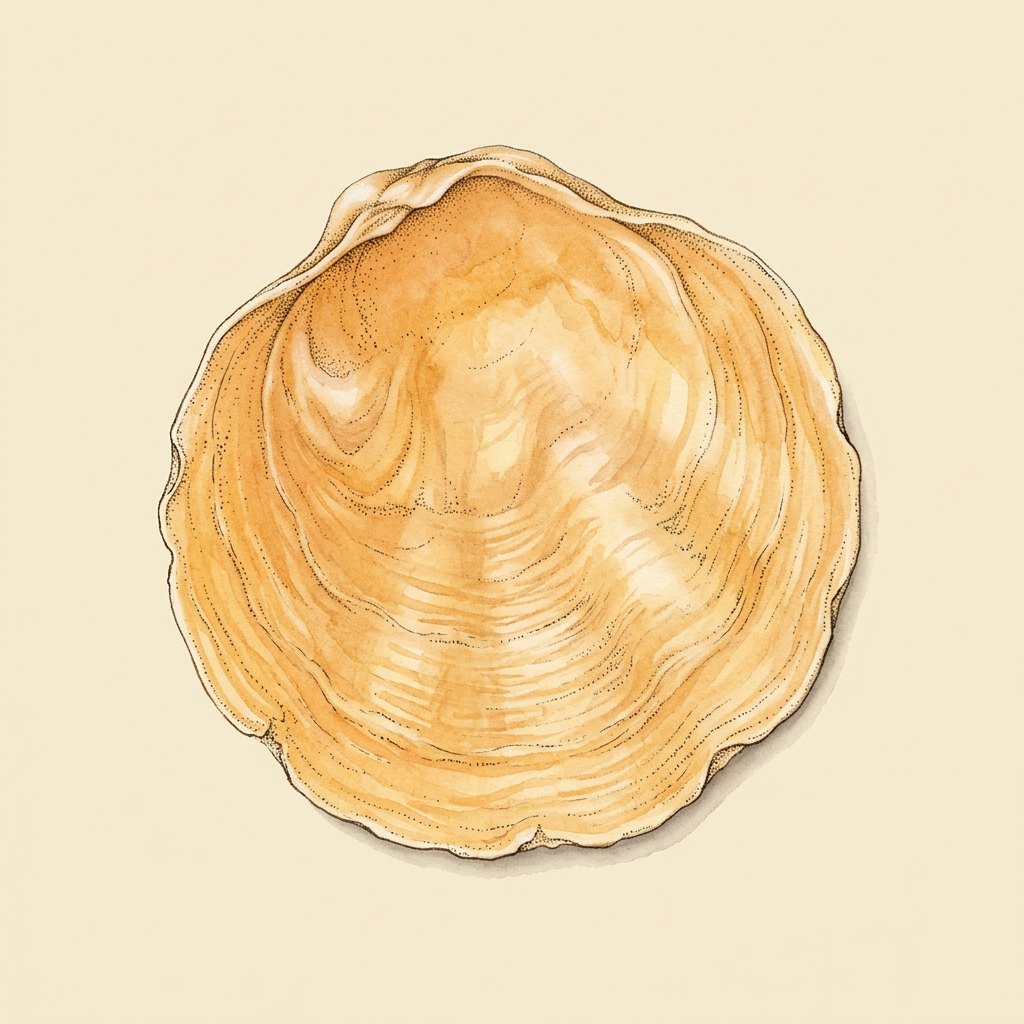
Eastern Oyster
Crassostrea virginica
Markings and exact colorations may vary.
The reef-building oyster of Florida's estuaries, irregular and rough outside with a smooth white scar inside.
- Typical size
- 2–8 in
- How often it turns up
- Very common
- Collecting
- Check local rules
- Handling
- Sharp edges
Loose beach-washed shells are usually fine. Never break shells from a living oyster bar, and never walk on one.
How to tell it apart
- Irregular, layered, elongated shape
- Chalky purple-white interior with a dark muscle scar
- Often fused to other oysters
Where to find these in Florida
Beaches rated very good or excellent for shells. Each page shows today’s score, the best window and access details.
- Anclote Key Preserve State Park · Tarpon Springs
- Bean Point · Anna Maria
- Beer Can Island (Greer Island) · Longboat Key
- Boca Grande Public Beach · Boca Grande
- Bowman's Beach · Sanibel
- Captiva Beach · Captiva
- Cayo Costa State Park · Cayo Costa
- Delnor-Wiggins Pass State Park · Naples
- Don Pedro Island State Park · Cape Haze
- Dr. Julian G. Bruce St. George Island State Park · St. George Island
- Gasparilla Island State Park · Boca Grande
- Gulfside City Park (Algiers Beach) · Sanibel
Found one?
Photograph it and BeachNut ranks the likely matches with a confidence read, then logs it to your collection with the beach and date.
Browsing beaches and the full field guide is free. A free account logs unlimited finds and gives you three photo identifications a day.
More shells in the field guide
Get Florida beachcombing tips
Occasional emails: what's washing up, shelling tips and new BeachNut features. No spam, unsubscribe any time.