Bladed Wentletrap
Epitonium albidum
Markings and exact colorations may vary.
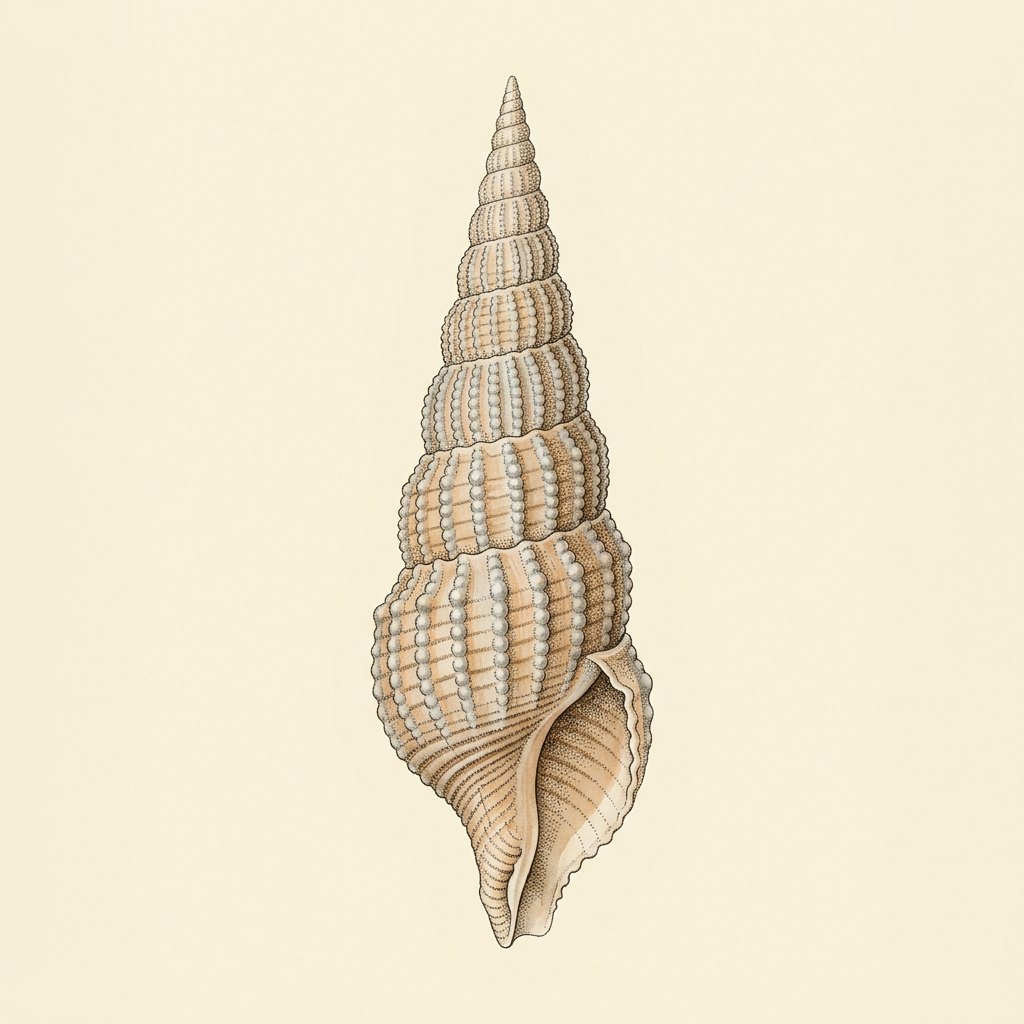
A slender white wentletrap with thin, sharp, blade-like ribs that line up from whorl to whorl.
- Typical size
- 0.5–0.7 in
- How often it turns up
- Uncommon
- Collecting
- Restricted
- Handling
- Safe to handle
Empty shells are fine to keep on most public beaches. Live shelling is banned in Lee County and Florida state parks and needs a fishing license elsewhere — if an animal is inside, put it back.
How to tell it apart
- Slender white spire
- 10–14 thin, sharp blade-like ribs per whorl
- Ribs line up continuously down the shell
Where to find these in Florida
Beaches rated very good or excellent for shells. Each page shows today’s score, the best window and access details.
- Anclote Key Preserve State Park · Tarpon Springs
- Bean Point · Anna Maria
- Beer Can Island (Greer Island) · Longboat Key
- Boca Grande Public Beach · Boca Grande
- Bowman's Beach · Sanibel
- Captiva Beach · Captiva
- Cayo Costa State Park · Cayo Costa
- Delnor-Wiggins Pass State Park · Naples
- Don Pedro Island State Park · Cape Haze
- Dr. Julian G. Bruce St. George Island State Park · St. George Island
- Gasparilla Island State Park · Boca Grande
- Gulfside City Park (Algiers Beach) · Sanibel
Found one?
Photograph it and BeachNut ranks the likely matches with a confidence read, then logs it to your collection with the beach and date.
Browsing beaches and the full field guide is free. A free account logs unlimited finds and gives you three photo identifications a day.
Commonly confused with
Angulate WentletrapEpitonium angulatum
Bladed wentletrap has thin blade-like ribs that line up down the shell; angulate ribs are thicker with an angled shoulder.
More shells in the field guide

Get Florida beachcombing tips
Occasional emails: what's washing up, shelling tips and new BeachNut features. No spam, unsubscribe any time.