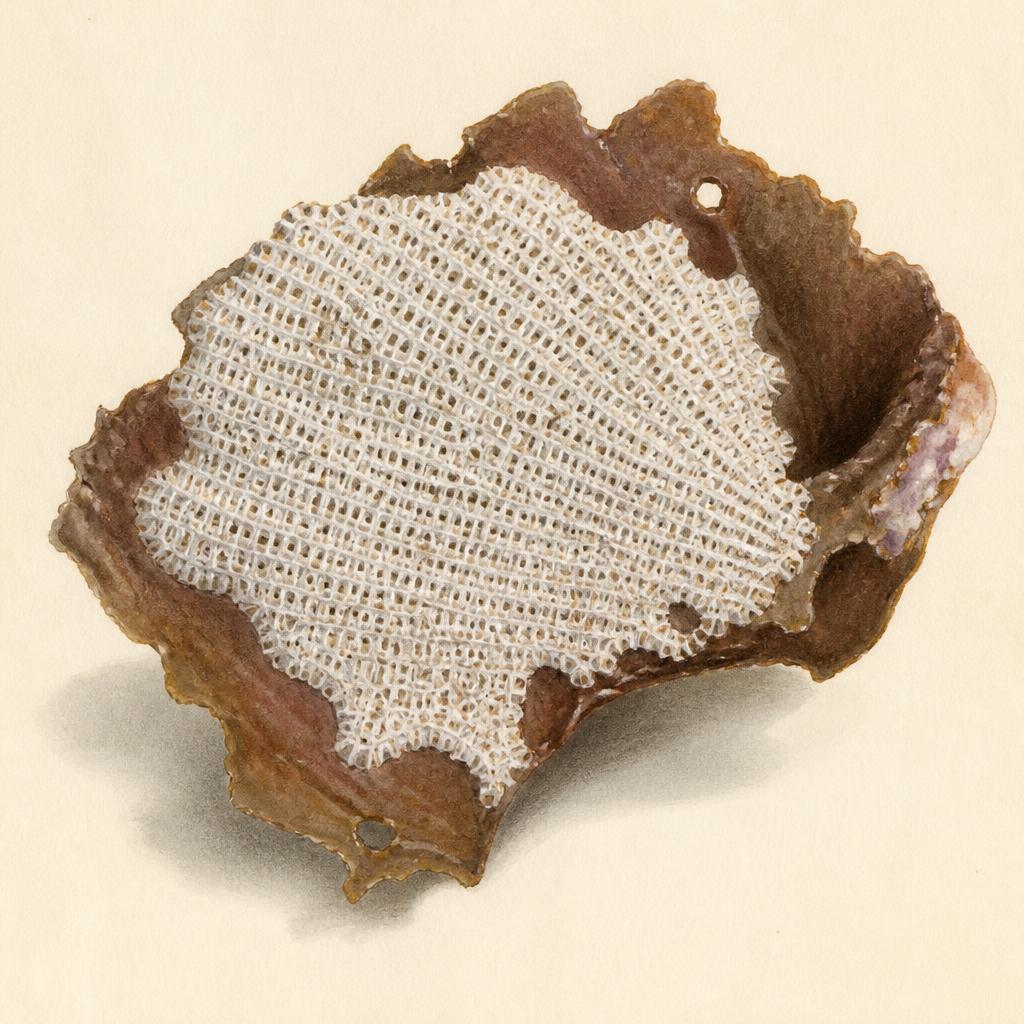
Sponge Fragment
Spongia and Ircinia species
Markings and exact colorations may vary.
A tough, spongy mass with a fibrous skeleton, often black or tan and full of holes.
- Typical size
- 2–12 in
- How often it turns up
- Common
- Collecting
- Check local rules
- Handling
- May be alive
Dried, detached sponge on the beach is usually fine. Commercial sponge harvest is separately regulated.
How to tell it apart
- Spongy but firm, springs back when squeezed
- Many holes and channels
- Black, tan or grey
Where to find these in Florida
Beaches rated very good or excellent for tidepool life. Each page shows today’s score, the best window and access details.
- Bathtub Reef Beach · Stuart
- Anne's Beach · Islamorada
- Bahia Honda State Park · Big Pine Key
- Bathtub Beach · Stuart
- Caspersen Beach · Venice
- Curry Hammock State Park · Marathon
- Fort Zachary Taylor Historic State Park · Key West
- Harry Harris Park · Tavernier
- Higgs Beach · Key West
- John Pennekamp Coral Reef State Park · Key Largo
- Long Key State Park · Long Key
- Marineland Beach · Marineland
Found one?
Photograph it and BeachNut ranks the likely matches with a confidence read, then logs it to your collection with the beach and date.
Browsing beaches and the full field guide is free. A free account logs unlimited finds and gives you three photo identifications a day.
More tidepool life in the field guide
Get Florida beachcombing tips
Occasional emails: what's washing up, shelling tips and new BeachNut features. No spam, unsubscribe any time.